
Technical SEO
What Are the Different Levels of SEO Audits?
Not every SEO audit is the same. Some audits check basic technical issues. Others diagnose crawlability, indexation, architecture, content, local visibility, performance, conversion paths and long-term organic growth opportunities.
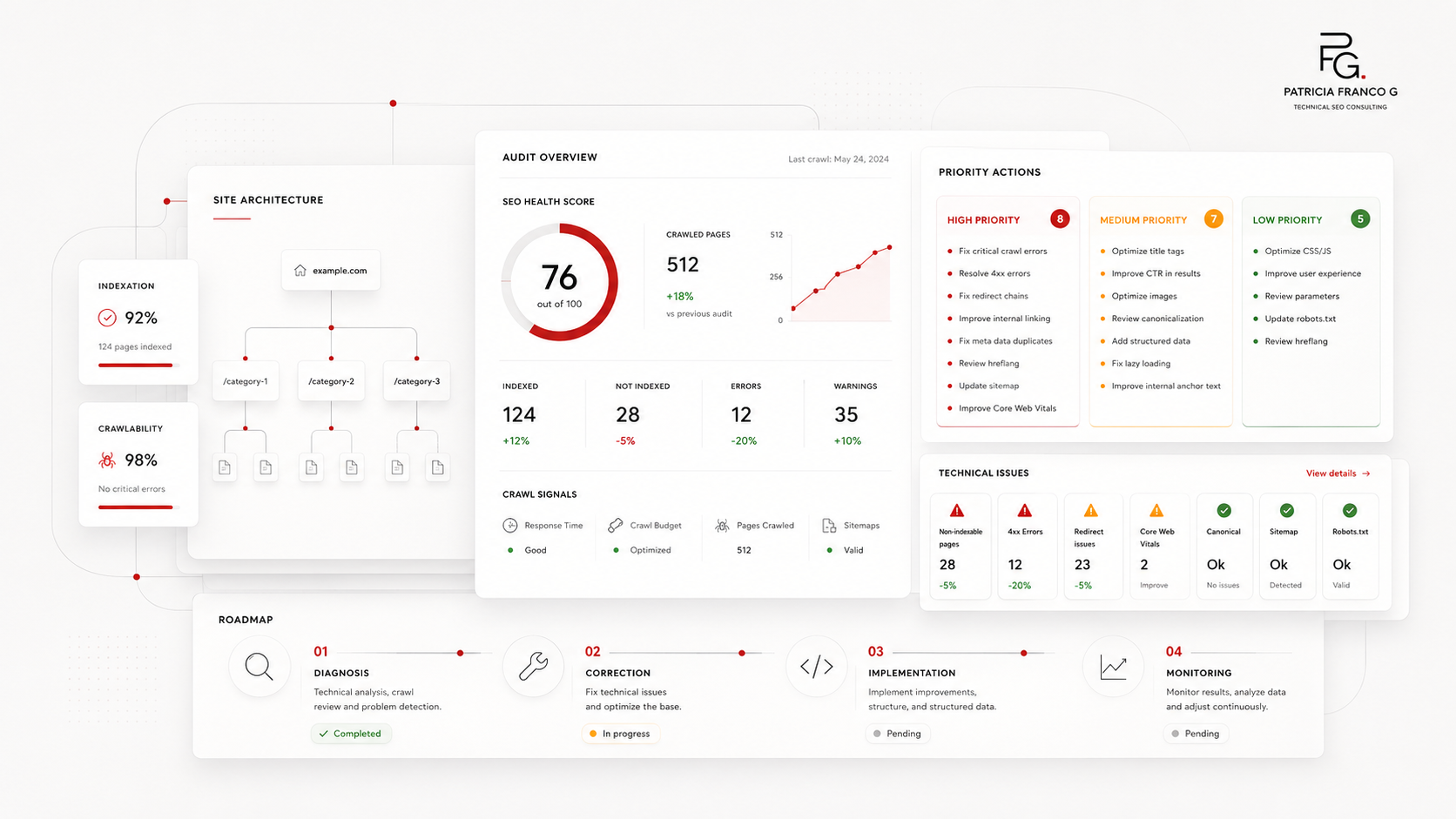
Some audits only check titles, meta descriptions and basic technical issues.
Others go deeper into crawlability, indexation, site architecture, internal linking, local SEO, content quality, structured data, conversion paths and long-term organic growth opportunities.
That difference matters.
Because a website can look professional, load correctly and still fail to generate qualified organic traffic.
The problem is not always design.
Many times, the problem is the invisible infrastructure: what Google can crawl, what it can index, how clearly it understands your services, how your pages are connected and whether your website is built to turn visibility into leads.
This guide explains the different levels of SEO audits, what each one includes and how to know which type of audit your website actually needs.
1. What is an SEO audit?
An SEO audit is a structured diagnosis of a website’s ability to be found, crawled, indexed, understood, ranked and converted into business opportunities.
A professional SEO audit should not be just a list of errors.
It should explain:
- What is blocking visibility.
- Which issues matter most.
- What should be fixed first.
- What opportunities exist.
- How the website should grow.
- How SEO connects to leads, calls, forms and revenue.
A useful audit turns technical information into decisions.
It should help a business owner understand what is happening, why it matters and what the next step should be.
2. Why SEO audits have different levels
SEO audits have different levels because websites have different problems.
A new website may need a basic technical review.
A local service business may need a Google Business Profile and local landing page audit.
A larger website may need crawl budget analysis, indexation mapping, internal linking strategy and content consolidation.
A business that depends on organic growth needs more than a checklist.
It needs a diagnosis, a roadmap and a system of measurement.
That is why the level of the audit should match the level of the problem.
A small issue does not always require a full strategic audit.
But a website that is not generating traffic, leads or visibility usually needs more than a basic scan.
3. Level 1: Basic SEO health check
A basic SEO health check is the simplest level of audit.
It gives a quick overview of obvious issues.
This level usually reviews:
- Page titles.
- Meta descriptions.
- H1 tags.
- Broken links.
- Missing image alt text.
- Basic speed signals.
- Sitemap availability.
- Robots.txt availability.
- Mobile responsiveness.
- Basic indexation status.
This type of audit is useful when a website owner wants a quick first look.
But it is not enough to build a full SEO strategy.
When this level makes sense
- The website is very small.
- You want a quick snapshot.
- You need to identify obvious errors.
- You are not ready for full implementation.
- You want to know if there are urgent technical problems.
Limitation
The limitation is that a basic check rarely explains the deeper cause.
It may tell you that a page has a missing meta description.
But it may not tell you whether that page should exist, whether it targets the right search intent, whether it is internally linked or whether it supports a commercial goal.
A basic audit finds symptoms.
A professional audit explains the system.
4. Level 2: Technical SEO audit
A technical SEO audit reviews the infrastructure of the website.
This is where the audit starts to become more serious.
Technical SEO focuses on whether search engines can access, crawl, render, index and understand the website.
A technical SEO audit may include:
- Crawl errors.
- Robots.txt.
- XML sitemaps.
- HTTP status codes.
- Redirect chains.
- Canonical tags.
- Duplicate URLs.
- URL structure.
- Internal linking.
- JavaScript rendering.
- Mobile usability.
- HTTPS.
- Page speed.
- Core Web Vitals.
- Indexation issues.
When this level matters
- Important pages are not showing in Google.
- Search Console shows indexing errors.
- The website has many redirects.
- Pages return 404 or 5xx errors.
- The website was redesigned or migrated.
- The site structure is confusing.
- Google seems to crawl the wrong pages.
A technical SEO audit is often the first serious step before investing in content or backlinks.
Because if Google cannot crawl and index the website correctly, the rest of the strategy becomes weaker.
5. Level 3: Crawl and indexation audit
A crawl and indexation audit goes deeper than a general technical review.
It focuses specifically on what Google can find, what it can crawl, what it indexes and what it excludes.
This level is critical when a website is published but not appearing in Google.
A crawl and indexation audit reviews:
- Which pages are indexed.
- Which important pages are not indexed.
- Which low-value pages are indexed.
- Pages excluded by noindex.
- Pages blocked by robots.txt.
- Pages discovered but not indexed.
- Pages crawled but not indexed.
- Canonical conflicts.
- Orphan pages.
- Sitemap accuracy.
- Internal linking depth.
- Crawlable URL structure.
Why this matters
Indexation is not automatic.
A page can be published, accessible and still not be included in Google’s index.
That is why sending a URL to Google is not always enough.
If the page has weak content, poor internal linking, noindex, canonical problems or low perceived value, it may remain invisible.
6. Level 4: On-page SEO audit
An on-page SEO audit reviews how well individual pages are optimized.
This level checks whether each page has a clear purpose, a clear topic and a clear connection between search intent and business intent.
It usually reviews:
- Title tags.
- Meta descriptions.
- H1 structure.
- H2 and H3 structure.
- Keyword usage.
- Content clarity.
- Page purpose.
- Internal links.
- Image alt text.
- Calls to action.
- URL structure.
- Duplicate content.
- Thin content.
- Search intent alignment.
What a good on-page audit should answer
- What is this page trying to rank for?
- Does the page match the search intent?
- Is the content clear enough for users?
- Is the page connected to the rest of the site?
- Does it support a service, category or conversion goal?
- Does the user know what to do next?
On-page SEO is not about stuffing keywords.
It is about clarity.
A page should help both Google and the user understand what the page is about, why it matters and what action should happen next.
7. Level 5: Content and search intent audit
A content audit reviews whether the website is publishing the right content for the right audience.
This is different from checking grammar or word count.
A professional content audit looks at strategy.
It analyzes:
- Search intent.
- Content gaps.
- Duplicate topics.
- Thin pages.
- Outdated content.
- Commercial pages.
- Informational articles.
- Topic clusters.
- Keyword opportunities.
- Internal linking between articles and services.
- Content that attracts traffic but does not convert.
- Content that should be updated, merged, removed or expanded.
Why this level matters
Many websites publish content without a system.
They create blog posts, but those posts do not support the services.
They create service pages, but those pages do not answer real questions.
They target keywords, but not intent.
A content audit helps turn random content into a strategic library.
For service-based businesses, this is especially important.
The blog should educate. The service pages should convert. The internal links should connect both.
8. Level 6: Site architecture audit
A site architecture audit reviews how the website is organized.
This is one of the most important levels for service-based businesses.
A weak structure usually looks like this:
Home → Services → Contact
Everything is pushed into one general services page.
That makes it harder for Google to understand each service and harder for users to find the exact solution they need.
A site architecture audit reviews:
- Menu structure.
- Service page hierarchy.
- Category structure.
- URL organization.
- Internal linking.
- Click depth.
- Orphan pages.
- Topic clusters.
- Blog-to-service connections.
- Local page structure.
- Conversion paths.
What this audit should produce
- Which pages should exist.
- Which pages should be merged.
- Which pages should be removed.
- Which pages need stronger internal links.
- Which service pages need their own URL.
- Which blog articles should support commercial pages.
- Which pages should become hubs.
Architecture is not decoration.
It is the structure that allows organic growth to scale.
9. Level 7: Local SEO audit
A local SEO audit is essential when a business depends on a city, region, service area or physical location.
This level applies to:
- Clinics.
- Lawyers.
- Consultants.
- Home services.
- Local agencies.
- Medical offices.
- Real estate services.
- Restaurants.
- Professional service providers.
- Businesses with several locations.
A local SEO audit reviews:
- Google Business Profile.
- Primary category.
- Secondary categories.
- Services.
- Reviews.
- Review responses.
- Photos.
- Business description.
- Service areas.
- NAP consistency.
- Local landing pages.
- Local schema.
- Local competitors.
- Map visibility.
- Calls and direction requests.
- Website connection to the profile.
Why this matters
Local SEO is not just Google Maps.
It is the connection between your profile, your website, your services, your location, your reviews and your authority.
A business can have a Google Business Profile and still fail locally if the website does not support the same services and locations.
A local SEO audit helps identify whether Google can clearly understand what the business does, where it operates and why it should appear for local searches.
10. Level 8: Structured data and entity audit
Structured data helps search engines understand specific information on a page.
A structured data audit reviews:
- Organization schema.
- LocalBusiness schema.
- Service schema.
- Article schema.
- FAQPage schema.
- BreadcrumbList schema.
- WebSite schema.
- Person schema.
- Schema errors.
- Schema warnings.
- Incorrect or misleading markup.
- Missing entity signals.
Important
Structured data is not magic.
It does not fix weak content. It does not replace architecture. It does not guarantee rankings.
But when implemented correctly, it can reinforce what already exists on the page.
For technical SEO consulting, structured data can help clarify the relationship between the business, services, articles, author, location and website entity.
11. Level 9: Performance and Core Web Vitals audit
A performance audit reviews how fast and stable the website feels for users.
It is not only about speed scores.
It is about experience.
A performance audit may include:
- Largest Contentful Paint.
- Interaction to Next Paint.
- Cumulative Layout Shift.
- Mobile load performance.
- Image weight.
- Render-blocking resources.
- Scripts.
- Fonts.
- Hosting limitations.
- Layout shifts.
- Page templates.
- Heavy builders or plugins.
Why this matters
A slow website can affect users before they ever become leads.
If a page takes too long to load, shifts while loading or performs poorly on mobile, the user may leave before reading the offer.
For service businesses, this affects more than SEO.
It affects trust.
12. Level 10: Strategic SEO audit
A strategic SEO audit is the highest level.
It does not only ask:
“What is broken?”
It asks:
“What should this website become?”
This level connects technical SEO, content, architecture, local SEO, business goals, conversion, measurement and implementation.
A strategic SEO audit reviews:
- Current visibility.
- Technical blockers.
- Indexation problems.
- Service architecture.
- Keyword opportunities.
- Local opportunities.
- Competitor gaps.
- Conversion paths.
- Content clusters.
- Tracking setup.
- Lead generation goals.
- Implementation priorities.
- 90-day roadmap.
- 12-month organic growth direction.
What makes this different
A strategic SEO audit does not leave the client with a random list of tasks.
It creates direction.
It answers:
- What should be fixed first?
- What has the highest impact?
- What should be implemented now?
- What can wait?
- What pages should be created?
- What content should support services?
- What should be measured monthly?
- What is the growth roadmap?
This is the type of audit a business needs when the website is not just a website.
It is supposed to become a real organic acquisition channel.
13. Which level of SEO audit do you need?
The right level depends on the problem.
If your website is new and you only need a quick overview, a basic SEO health check may be enough.
If your pages are not showing in Google, you need a crawl and indexation audit.
If your website is visible but not generating leads, you need a content, architecture and conversion review.
If your business depends on local searches, you need a local SEO audit.
If you are investing in monthly SEO, you need a strategic audit before implementation.
Simple decision framework
- Choose a basic SEO health check if you need a quick first look.
- Choose a technical SEO audit if the website may have infrastructure problems.
- Choose a crawl and indexation audit if pages are not appearing in Google.
- Choose an on-page SEO audit if individual pages are weak or unclear.
- Choose a content audit if your blog and service pages are not supporting growth.
- Choose a site architecture audit if your services, categories or internal links are disorganized.
- Choose a local SEO audit if city, area or map visibility matters.
- Choose a structured data audit if Google may not clearly understand your business entity.
- Choose a performance audit if speed and mobile experience are weak.
- Choose a strategic SEO audit if you need priorities, roadmap, implementation and measurement.
14. Common mistakes in superficial SEO audits
A superficial audit can create more confusion than clarity.
These are common mistakes:
- Exporting a tool report without interpretation.
- Listing every issue without priority.
- Treating all errors as equally important.
- Ignoring Search Console.
- Ignoring business goals.
- Ignoring service pages.
- Ignoring local SEO.
- Ignoring content intent.
- Ignoring conversion.
- Ignoring internal linking.
- Ignoring whether pages should exist.
- Giving recommendations without a roadmap.
- Measuring rankings without measuring leads.
- Fixing small issues while major blockers remain.
A professional audit should not just tell you what is wrong.
It should tell you what matters.
15. SEO audit checklist
Before hiring or reviewing an SEO audit, check whether it includes:
- Crawlability.
- Indexation.
- Robots.txt.
- Sitemap.
- Canonical tags.
- Status codes.
- Redirects.
- Mobile experience.
- Core Web Vitals.
- URL structure.
- Internal linking.
- Page titles.
- Meta descriptions.
- Header structure.
- Content quality.
- Search intent.
- Service page structure.
- Local SEO, if relevant.
- Google Business Profile, if relevant.
- Structured data.
- Keyword opportunities.
- Competitor gaps.
- Conversion paths.
- Measurement setup.
- Priority levels.
- Implementation roadmap.
- Clear next steps.
If an audit does not tell you what to do first, it is not strategic enough.
16. Frequently asked questions
What is the most important type of SEO audit?
The most important type depends on the website’s current problem.
If the site is not appearing in Google, crawl and indexation come first.
If the site appears but does not generate leads, architecture, content and conversion may be more important.
If the business depends on a city or region, local SEO must be reviewed.
Is a technical SEO audit enough?
Not always.
A technical SEO audit can find infrastructure problems, but it may not fully address search intent, content quality, service positioning, local visibility or conversion.
Technical SEO is the base.
But growth usually needs more than technical fixes.
How often should a website be audited?
A deep audit should happen before starting serious SEO work, after a redesign, after a migration, after a traffic drop or when the website is not generating visibility or leads.
After that, monthly monitoring should review errors, rankings, clicks, impressions, conversions and new opportunities.
Can an SEO audit improve rankings by itself?
No.
An audit is a diagnosis.
Rankings improve when the right recommendations are implemented, measured and refined over time.
A diagnosis without implementation does not create growth.
What should I receive after an SEO audit?
You should receive more than a list of errors.
A professional audit should include findings, priority levels, affected URLs, explanations, recommendations, opportunities and a roadmap.
The goal is clarity.
17. Conclusion
SEO audits have levels because websites have different problems.
A basic health check can identify visible issues.
A technical audit can uncover infrastructure problems.
A crawl and indexation audit can explain why pages are not appearing in Google.
A content audit can reveal whether your website answers real search intent.
A local SEO audit can show why your business is not appearing when people search in your city.
A strategic SEO audit connects all of it into a roadmap.
That is the difference between a checklist and a diagnosis.
A checklist gives you tasks.
A diagnosis gives you direction.
A professional SEO audit should help you understand what is blocking visibility, what should be fixed first and how your website can become a measurable organic growth system.
18. Recommended next steps
To keep learning, read these related resources:
- Technical SEO Audit: What a Professional Diagnosis Should Include
- Why Your Website Is Not Showing Up on Google
- What Is Google Indexation?
Need to know which level of SEO audit your website needs?
A strategic SEO audit can review crawlability, indexation, architecture, content, local visibility, structured data, performance and conversion paths.
Request an SEO Audit